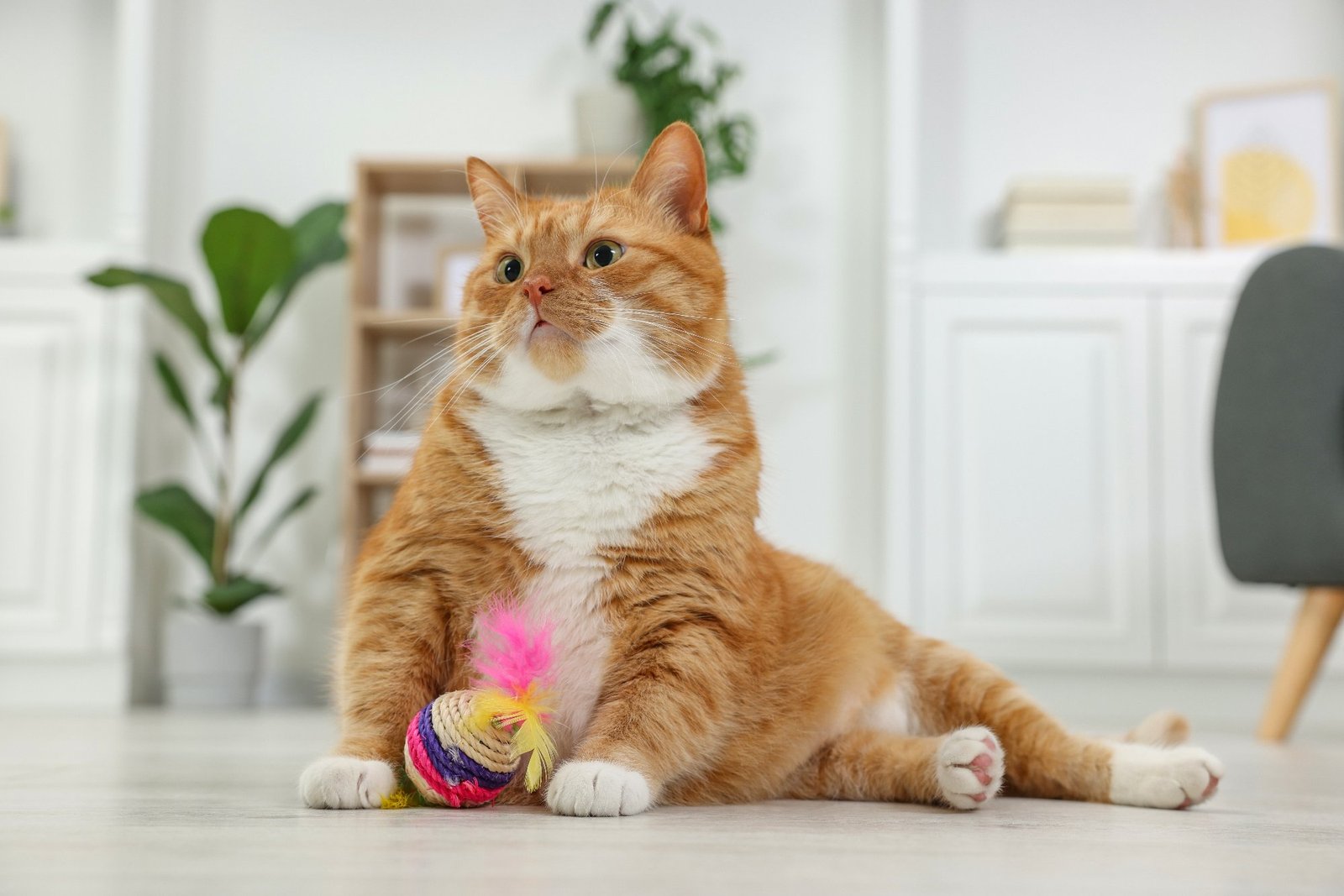
Between 33% and 46% of UK cats are estimated to be overweight. Most of their owners do not know. This is not a judgement — the signs are subtle and the causes are usually systemic, not personal.
A cat carrying extra weight is not simply a cosmetic concern. Excess weight in cats is associated with significantly higher risk of diabetes, joint deterioration, urinary problems, and a shortened lifespan.1 What makes this harder is that chubby cats are often described as cute — and the culture around it can obscure a real health issue.
How to assess your cat at home
Vets use a Body Condition Score (BCS) scale from 1 to 9.2 At an ideal weight — around 4 to 5 — you should be able to feel your cat's ribs without pressing hard, but not see them clearly. Their waist, viewed from above, should be visible. Their abdomen, viewed from the side, should tuck upward slightly.
- Ribs clearly visible and prominent — likely underweight
- Ribs easily felt with light pressure, visible waist — ideal
- Ribs felt only with firm pressure, little or no waist — overweight
- Ribs not felt even with pressure, rounded abdomen — obese
The feeding habits that quietly contribute
Free feeding — leaving dry food out all day — is one of the most common contributors to feline obesity in the UK.1 Cats graze, often past hunger, especially when food is always available. Portion-controlled meals, ideally twice a day with wet food as the main component, are what most feline nutritionists now recommend.3
Treats matter more than most people think. A small cat needs very few extra calories. The brands we carry — Thrive, Scrumbles, Lily's Kitchen — have honest portion guidance and real ingredients, which makes the maths simpler.