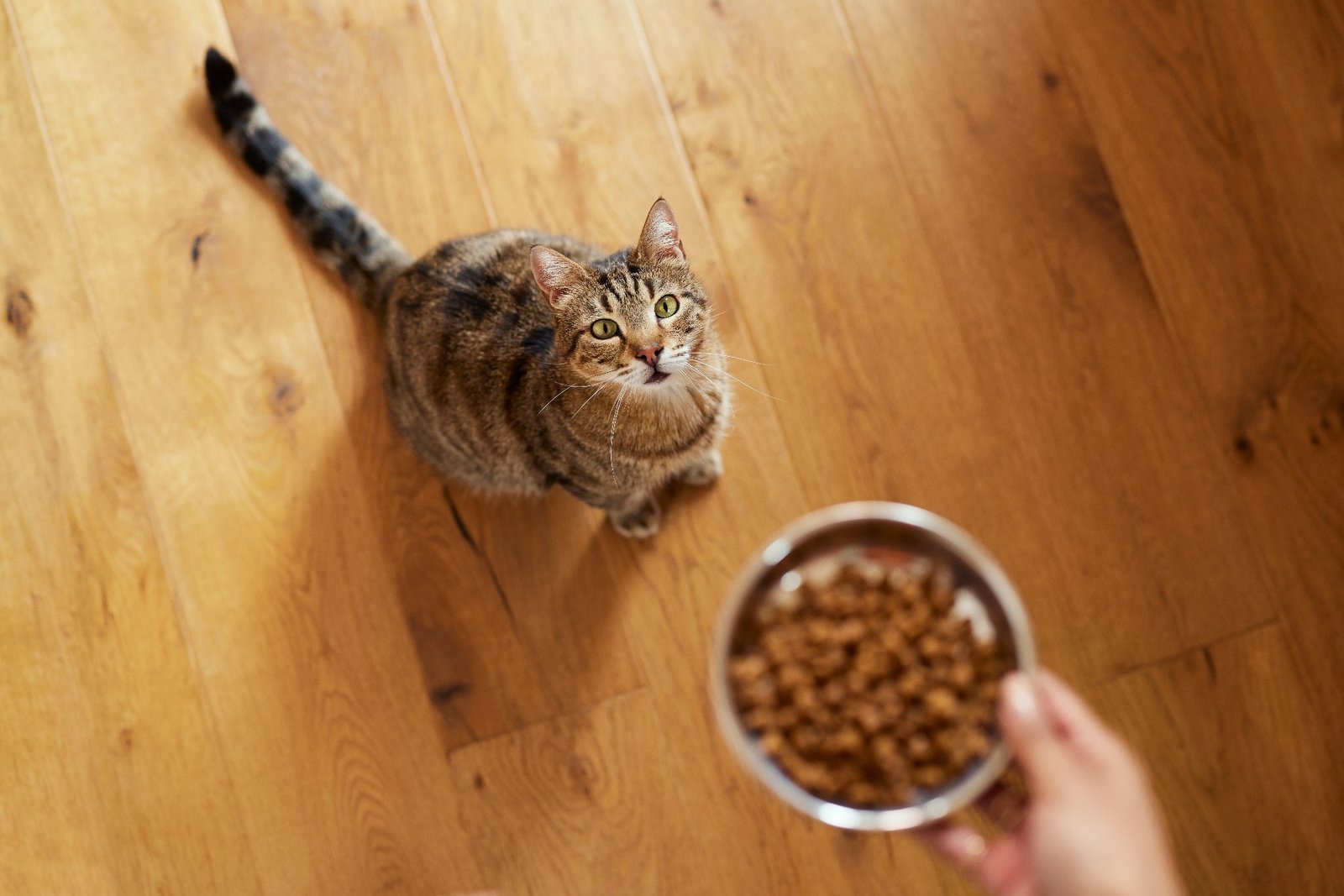
Cats are neophobic by nature — they are wired to be suspicious of new food. This is not stubbornness. It is a survival mechanism. Understanding that makes the transition a lot less frustrating.
In the wild, a cat that kept eating something unfamiliar without caution was a cat at risk of poisoning. The instinct to reject new food — especially a new texture or smell — is deeply embedded. It means that switching from a grain-heavy food your cat has eaten for years to a high-protein wet food will almost certainly require patience. It does not mean they will never accept it.
The transition protocol that actually works
- Days 1–3: 75% old food, 25% new food. Mixed together in the bowl.
- Days 4–6: 50% old food, 50% new food.
- Days 7–9: 25% old food, 75% new food.
- Day 10+: New food only, if accepted. If not, hold at the last accepted ratio for another few days.
If your cat refuses entirely at any stage, go back one step. Do not rush. A transition that takes three weeks and succeeds is better than one that takes three days and fails.
The fussy cat: what is usually happening
If your cat has been eating the same food for years, they may have developed a genuine textural preference — often for dry food, which has a very different feel in the mouth to wet. Adding a small amount of warm water or low-sodium broth to wet food can bridge this gap.3
Some cats are also pheromone-sensitive — they will reject food touched by another cat, or food that has been refrigerated and has a different smell. Serving wet food at room temperature makes a notable difference for many cats.