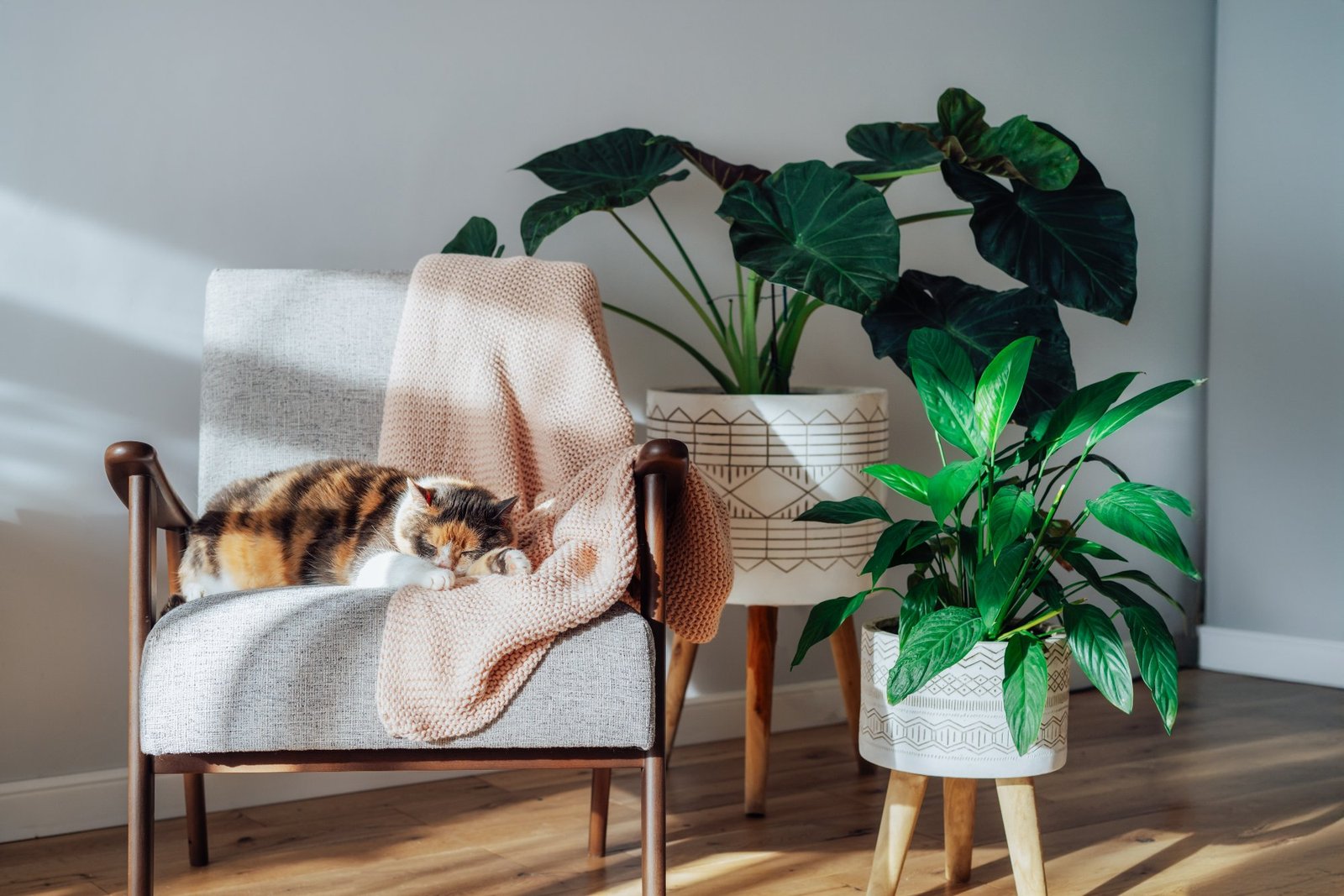
The indoor cat is a relatively recent invention. For most of feline history, cats hunted, roamed, climbed, and chose their own territories. Your flat is warm, safe, and genuinely small. That requires some thought.
The UK is estimated to have around 10.2 million owned cats.1 A growing proportion live entirely indoors, driven by urban density, road safety concerns, and the rising popularity of flat living. Indoor life is not inherently bad for a cat. But it requires active compensation for what a cat does not get by default: space, stimulation, and the psychological satisfaction of hunting.
Boredom looks like a lot of things
Destructive scratching is often boredom. Overeating is sometimes boredom. Aggression between cats sharing a space is frequently boredom paired with inadequate territory.2 A cat sleeping 18 hours a day and eating for the other six is not necessarily lazy, it may simply have nothing else to do.
5+ vertical spaces, hiding spots, and territory markers recommended per cat in an indoor home3
2–3× daily play sessions shown to reduce anxiety and food fixation in indoor cats3
The food-enrichment connection
Cats are built to work for food. The act of hunting, the stalk, the pounce, the catch, is as satisfying neurologically as the eating itself.4 When food appears twice daily in a bowl with no effort required, that loop is severed entirely. Puzzle feeders, licky mats, and scatter feeding are not gimmicks. They tap into something genuine.
"We started including enrichment items not because they are cute accessories, but because a mentally stimulated cat eats slower, maintains healthier weight, and shows less anxiety-driven behaviour."— Nine Lives Club
What genuinely helps, in order of impact
Vertical space — cat trees, shelves, high perches. Cats feel safer when they can observe from height.3
Daily interactive play — a wand toy for 10 minutes has measurable impact on stress markers.4
Window access — even watching birds matters. Consider a window perch if possible.
Puzzle feeders or scatter feeding — engages predatory behaviour and slows eating.4
Rotating toys — novelty matters. A toy that disappears for two weeks becomes interesting again.
Consistent routine — cats are more sensitive to routine disruption than most owners realise.5
What we add to Total Care boxes: Our Box 3 includes enrichment items chosen to support indoor cats specifically, treats designed for interactive feeding, and seasonal additions that introduce novelty. Care that does not stop at the bowl.
Sources